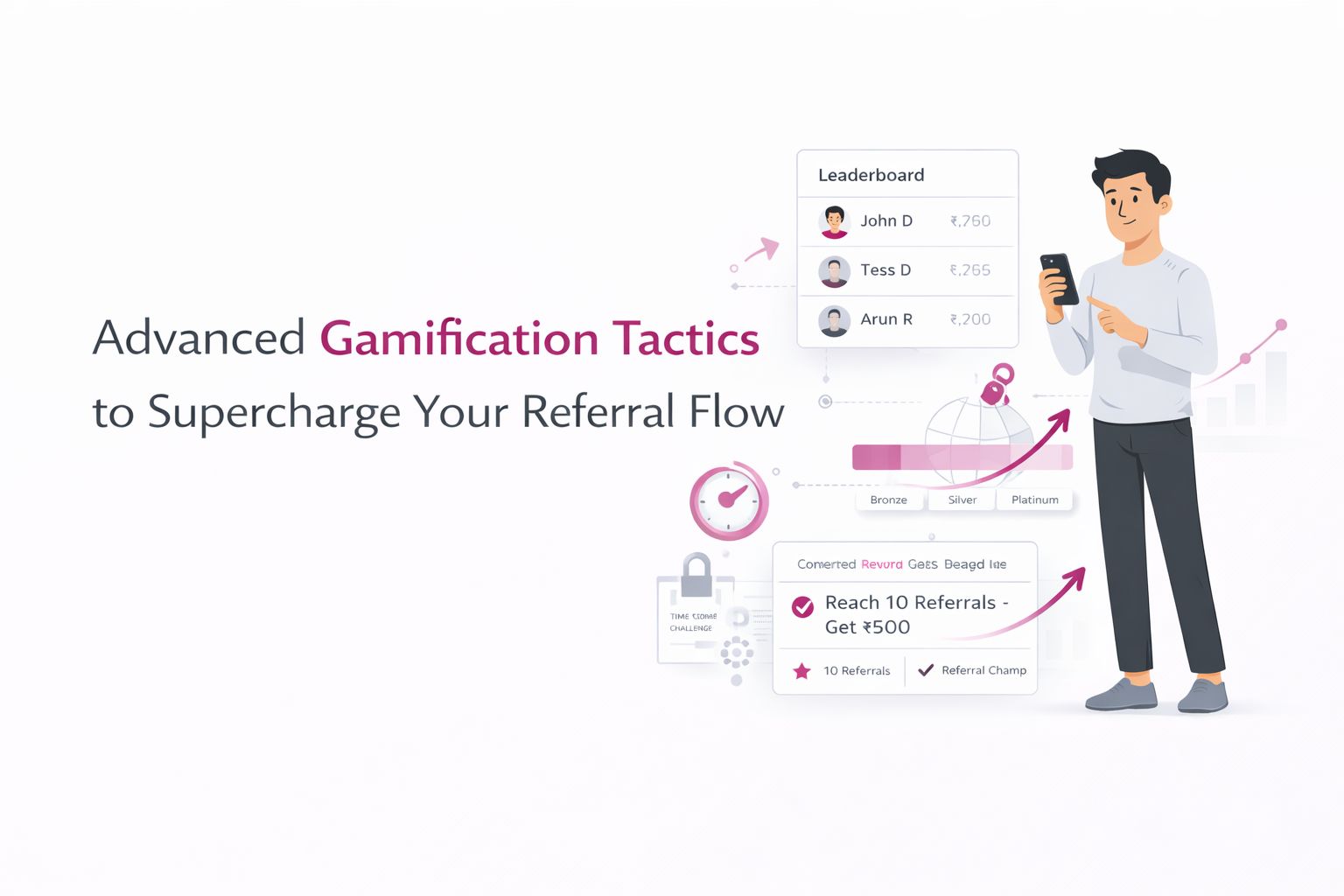
Gamification isn’t just for games—it’s a powerful way to motivate and engage your customers in referral programs. By introducing game-like elements, you tap into basic human desires: competition, achievement, and status. In this post, you’ll learn why gamification works, explore top tactics to make your referral flow irresistible, and see what a gamified campaign can look like in practice.
1. Why does gamification increase referrals?
- Leverages Intrinsic Motivation: Elements like points, badges, and levels trigger feelings of accomplishment and fun.
- Encourages Repeat Activity: Challenges and time-bound goals keep customers coming back to earn more rewards.
- Creates Social Proof & Competition: Leaderboards showcase top referrers, fueling friendly rivalry and FOMO.
The effect varies by brand and audience, so treat gamification as something to test: measure participation before and after you launch a new mechanic.
2. Which gamification techniques work for referral programs?
A. Leaderboards
Show a real-time ranking of top referrers on your referral dashboard or thank-you page. Public recognition motivates participants to climb the ranks and stay active.
B. Tiered Rewards & Levels
Implement levels (Bronze, Silver, Gold, Platinum) based on referral count. Each tier unlocks progressively better rewards—encouraging customers to push for the next milestone.
C. Time-Bound Challenges
Run limited-time referral contests—for example, “Refer 3 friends this weekend to win an exclusive gift.” Deadlines drive urgency and spike participation.
D. Badges & Achievements
Award digital badges for specific actions (e.g., “First Referral,” “Referral Champion”). Display badges in user profiles or emails to foster pride and shareability.
E. Collaborative Goals
Set community goals (“100 referrals this month unlocks a site-wide sale”). Shared objectives build a sense of teamwork and collective achievement.
3. How do you add gamification to a referral program?
- Define Clear Objectives: Decide what behaviors you want to drive—more shares, higher conversion rates, or incremental AOV.
- Design Reward Structures: Align rewards with customer value: small but frequent rewards for lower tiers, and premium perks for top tiers.
- Build Engaging UI Elements: Use real-time counters, progress bars, and leaderboards in your dashboard widgets.
- Communicate & Promote: Launch gamified features with an announcement email and in-app banner.
- Iterate Based on Data: A/B test different challenge types, tier thresholds, and reward values.
4. What does a gamified referral campaign look like?
These are example set-ups to adapt, not results to expect. Measure your own baseline first.
- Health & wellness brand: A weekly “Wellness Warrior” leaderboard where the top 10 referrers each earn a premium product sample.
- Fashion D2C brand: Tiered levels, with Gold members getting free shipping for life, so active referrers have a reason to reach the next level.
- Subscription brand: A 48-hour “Referral Sprint” challenge that gives customers a short deadline and a clear target.
For each one, track weekly referrals and referral orders against the weeks before launch to see whether it actually moved the numbers.
Conclusion
Gamification transforms static referral processes into dynamic, fun, and highly engaging experiences. By applying leaderboards, tiered rewards, challenges, badges, and collaborative goals, you’ll supercharge your referral flow, deepen customer loyalty, and drive exponential growth.