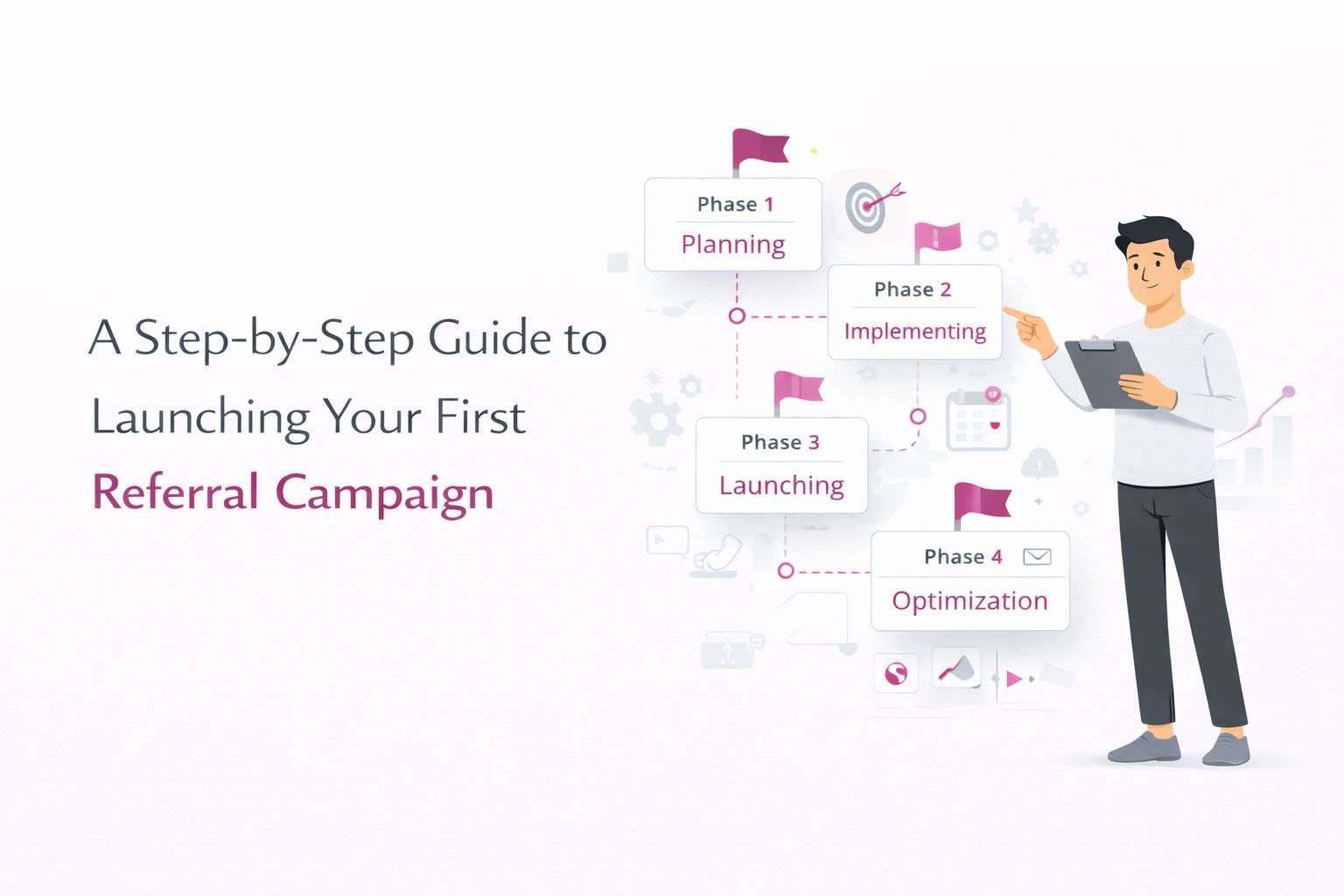
Launching your first referral campaign can feel daunting—but with the right process, you’ll go live quickly and effectively drive new customer acquisition. This guide walks you through every step: from initial planning to post-launch optimization. Follow this roadmap to create a smooth, high-impact referral program that converts.
Phase 1: Planning Your Referral Campaign
1. Define Your Objectives & KPIs
- Set Clear Goals: e.g., acquire 100 new customers via referrals in month one.
- Choose Key Metrics: Referral rate, referral conversion rate, referral CAC, incremental revenue.
2. Identify Your Target Audience
- Customer Segments: High-LTV customers, frequent purchasers, VIP members.
- Demographics: Understand where your customers hang out (WhatsApp vs. email).
3. Select Incentives & Rewards
- Win–Win Rewards: Decide what referrers and referees receive (e.g., ₹150 UPI cashback for referrers; 10% discount for friends).
4. Choose Your Channels & Touchpoints
- Widgets & Landing Pages: Thank-you page, user dashboard, pop-ups.
- Communication Channels: WhatsApp, email, SMS.
5. Map the Customer Journey
- Referral Flow: Sketch each step—from invitation to purchase to reward payout.
Phase 2: Implementing Your Referral Program
1. Set Up Your Technology Stack
- Referral Platform Integration: Install your referral app on Shopify or your store.
- Automation Workflows: Configure automated messages and payout triggers.
2. Build & Customize Assets
- Design Widgets & Pages: Apply your brand colors, fonts, and imagery.
- Write Copy: Craft concise, benefit-focused headlines (e.g., “Give ₹100, Get ₹100!”).
3. QA & Testing
- Functional Testing: Verify link generation, share actions, and reward notifications.
- End-to-End Simulation: Place a test order and confirm the reward is delivered.
Phase 3: Launching & Promoting Your Campaign
1. Soft Launch (Pilot)
- Select a Small Cohort: Release to 5–10% of your customer base to gather early feedback.
2. Full Launch
- Announce Across Channels: Email newsletter, in-app banners, and social media posts.
3. Promotions & Reminders
- Drip Campaigns: Schedule reminders for customers who haven’t referred yet.
- Limited-Time Boosts: Run “double rewards” days to spike participation.
Phase 4: Monitoring & Optimizing Campaign Performance
1. Analyze Key Metrics
- Referral Rate & Conversion: Track weekly and compare against benchmarks.
- Channel Performance: Identify which channels drive the most referrals.
2. A/B Testing & Iteration
- Test Incentives: Experiment with different cashback amounts or discount rates.
- Test Messaging: Try alternate CTAs (“Share & Earn” vs. “Invite Friends”).
3. Gather User Feedback
- Surveys & Polls: Ask customers about their referral experience.
4. Scale & Expand
- New Audiences: Open up the program to all customers once optimized.
Conclusion
By following this structured, four-phase approach—Plan, Implement, Launch, Monitor—you’ll build a referral campaign that not only performs out of the gate but also continually improves over time.