Social proof is one of the most powerful psychological triggers in marketing. When potential customers see evidence that others have had positive experiences with your brand, they’re far more likely to trust your offering—and refer it onward. In this post, we’ll unpack the role of social proof in fueling referrals and share practical tactics to integrate it into your referral program.
What is social proof?
Social proof refers to the phenomenon where people mirror the actions of others under the assumption that those actions reflect the correct behavior. In marketing, social proof manifests as:
- Testimonials & Reviews: Written or video endorsements from real customers.
- Ratings & Stars: Visual indicators of product/service quality (e.g., 4.8/5 stars).
- User-Generated Content (UGC): Photos, videos, and posts created by actual customers.
- Influencer & Expert Endorsements: Recommendations from trusted authorities.
By showcasing these forms of social validation, brands reduce uncertainty and build trust, making consumers more inclined to both purchase and refer.
Why does social proof drive more referrals?
1. Builds Trust
In Nielsen’s Global Trust in Advertising survey (2012), 92% of respondents said they trust recommendations from people they know, the highest of any form of advertising in the study. When you display authentic customer testimonials alongside your referral invitation, you tap into this deep well of peer trust.
2. Lowers Perceived Risk
Consumer surveys, such as BrightLocal’s annual Local Consumer Review Survey, have repeatedly found that many shoppers trust online reviews almost as much as personal recommendations. Displaying high ratings and positive reviews on your landing pages and referral widgets reassures potential referrers that sharing your brand won’t jeopardize their credibility.
3. Amplifies Word-of-Mouth Momentum
When new customers see others actively referring—and being rewarded—they’re more likely to participate themselves. UGC, like social posts using branded hashtags or unboxing videos, creates a bandwagon effect that keeps your referral program top of mind.
How do you add social proof to a referral program?
1. Embed Testimonials in Referral Touchpoints
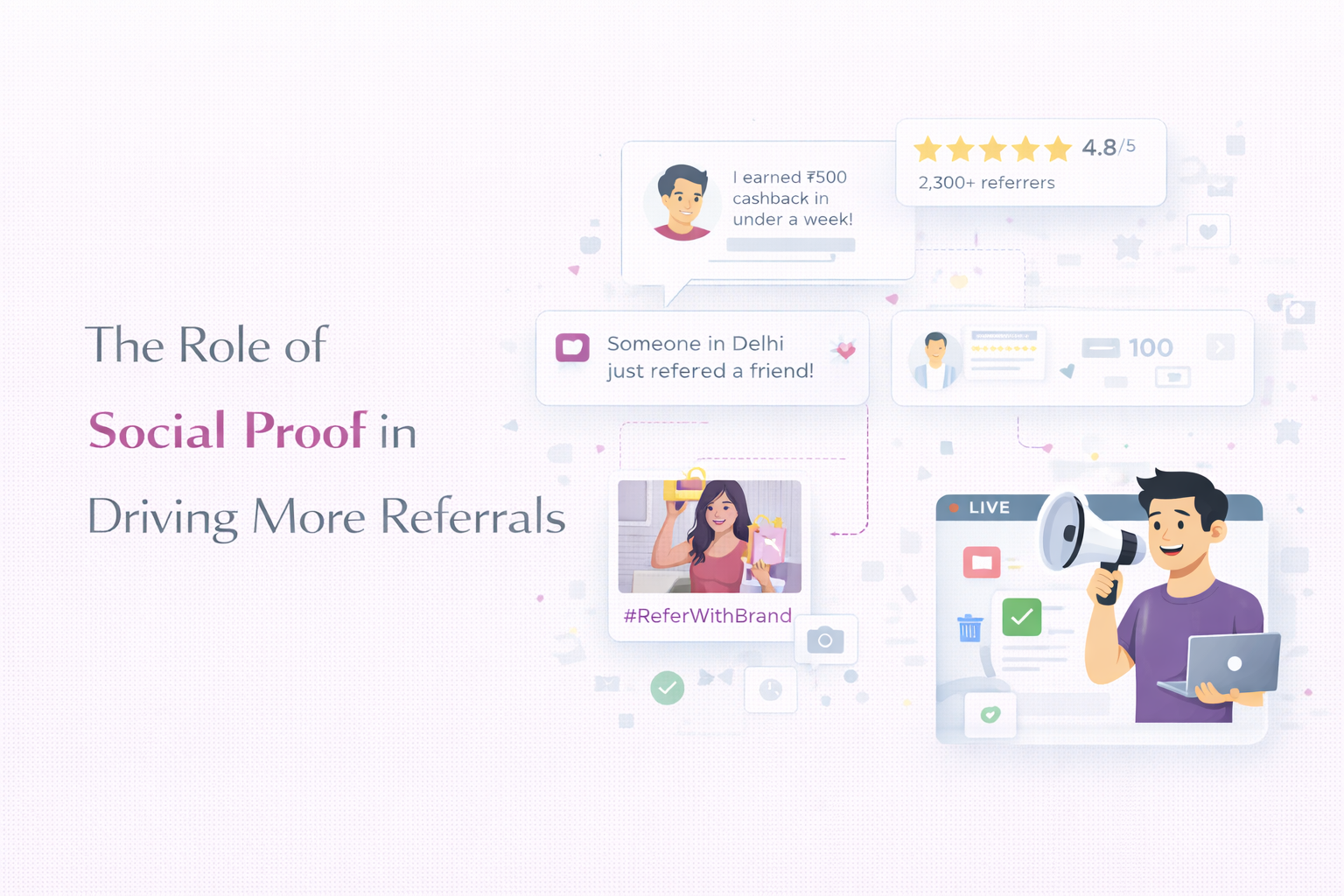
Place rotating customer quotes or video clips on your referral landing page, thank-you page, and referral emails. Use concise, benefit-focused testimonials (e.g., “I earned ₹500 cashback in under a week!”) to showcase real success stories.
2. Highlight Aggregate Ratings
Show overall star ratings and review counts near your “Refer & Earn” buttons or widgets. A clear line such as “4.8/5 ⭐️ from 2,300+ happy referrers” (using your own real numbers) helps prospects feel confident sharing.
3. Showcase User-Generated Content
Create a social feed widget or Instagram reel carousel featuring UGC—photos and videos of customers enjoying your products. Encourage customers to tag your brand with a specific hashtag (e.g., #ReferWithBrand) in exchange for bonus incentives.
4. Leverage Influencer Endorsements
Partner with micro-influencers whose audiences align with your target market. Feature short video testimonials or stories that demonstrate them referring friends. Their external credibility can prime new users to join your referral program.
5. Use Real-Time Notifications
Implement small pop-ups (“Someone in Delhi just referred a friend!”) on your site to display live referral activity. This “live proof” creates urgency and social legitimacy around your program.
What are examples of social proof in referral programs?
These are example set-ups to adapt. Measure referral sign-ups before and after you launch each one.
- Fashion brand: A rotating thank-you-page banner of customer selfies with “Referred by [Name]: Earned ₹200” callouts.
- Health & wellness D2C brand: An Instagram Story highlight of customer content tagged #WellnessWins, linked to the referral page.
- Beauty brand: Micro-influencers sharing their referral links during Instagram Lives to reach new first-time referrers.
Conclusion
Social proof isn’t just “nice to have”—it’s a cornerstone of high-performing referral programs. By weaving testimonials, reviews, UGC, and influencer endorsements into every referral touchpoint, you’ll amplify trust, reduce risk, and spark a continuous cycle of sharing.